Why Omaha Businesses Need Managed IT Services (2026 Guide)
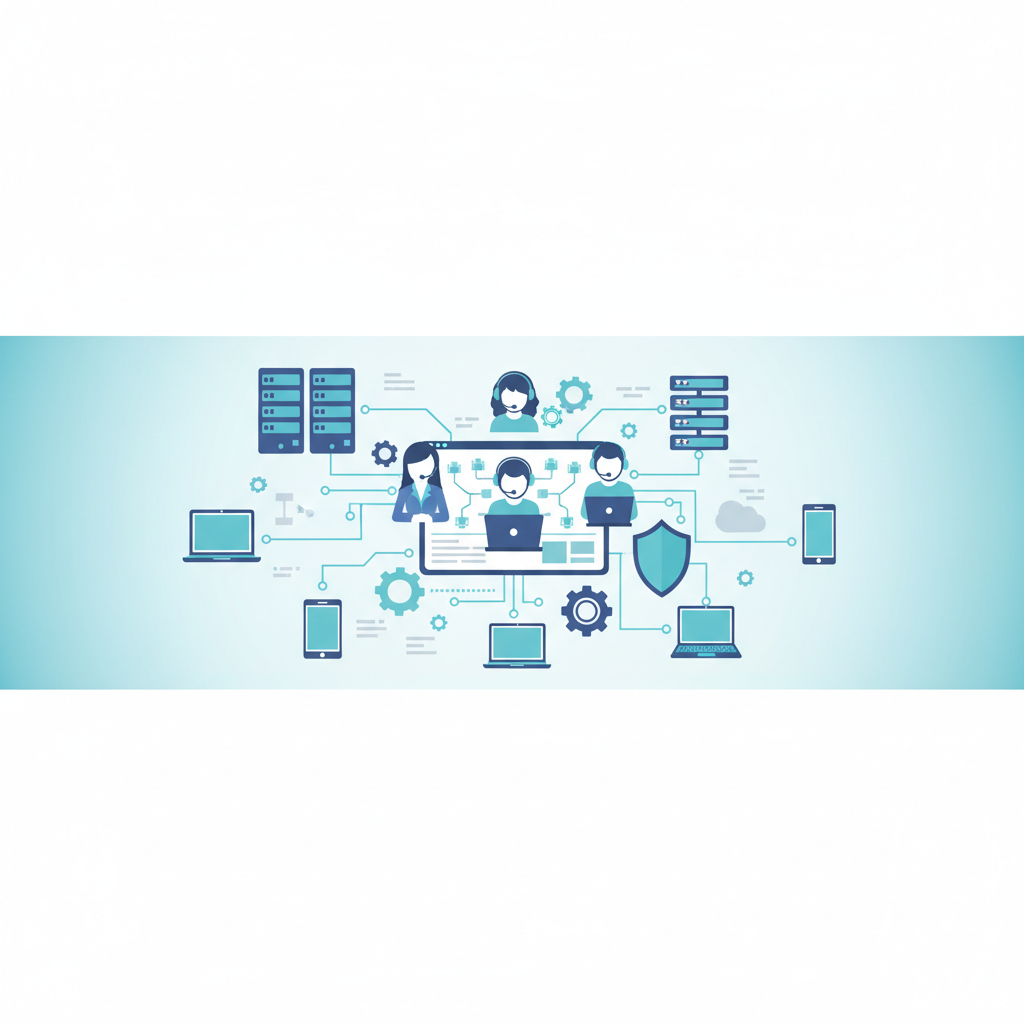
The case for managed IT in 2026 — why Omaha small and midsize businesses are moving away from break-fix and what's driving the shift.
Why Omaha Businesses Need Managed IT Services in 2026
If you're an Omaha business owner still operating on break-fix IT support — calling someone only when something breaks — you're in a shrinking minority. In 2026, more Omaha small and midsize businesses are moving to managed IT services, paying a flat monthly fee for proactive technology support and cybersecurity.
Here's why the shift is happening, and why it matters for your Omaha business.
The Short Answer
Omaha businesses need managed IT services because:
- Cyberattacks on small businesses have exploded — break-fix IT can't keep up
- Downtime costs more than ever — every hour offline hurts
- Cyber insurance requires it — and carriers are enforcing the requirements
- Cloud and Microsoft 365 need management — they don't manage themselves
- Skilled IT talent is hard to hire locally — especially in Omaha
- Break-fix IT usually costs more — once you add up the year
Let's go deeper on each.
1. Cyberattacks on Small Businesses Are Exploding
This is the biggest reason Omaha businesses move to managed IT. Cybercrime targeting small businesses has grown dramatically:
- Ransomware appeared in 48% of confirmed breaches — up from 44% the year before (Verizon DBIR 2026)
- 31% of breaches now start with an unpatched vulnerability, the top entry point for the first time (Verizon DBIR 2026)
- 68% of breaches involved a non-malicious human element — someone clicking or entering credentials (Verizon DBIR 2024)
- Recovery costs run well into six figures across ransom, downtime and rebuilding; the FBI's Internet Crime Complaint Center publishes the annual national figures
Break-fix IT can't stop this. Attackers don't wait until you call someone — they strike when defenses are lowest. Without 24/7 monitoring, endpoint protection, MFA, and regular patching, you're relying on luck.
Managed IT brings layered cybersecurity to Omaha small businesses. With DME, endpoint detection and response (EDR), ransomware protection, patch management, 24/7 device monitoring and backup monitoring are in every plan. Email security and Managed ITDR come with the Full plan. MFA rollout and security awareness training are scoped and quoted separately.
2. Downtime Costs More Than Ever
The average cost of IT downtime for a small business is often estimated in the thousands of dollars per hour depending on industry — and higher for revenue-dependent operations.
Omaha businesses that rely on their technology — essentially, all of them in 2026 — can't afford break-fix reaction times:
- Break-fix: something breaks → you call → someone shows up eventually → repair
- Managed IT: 24/7 monitoring → issue detected automatically → fixed before you know
The point of proactive monitoring is that most issues get caught and cleared before they interrupt anyone's day. That's the difference proactive IT makes.
3. Cyber Insurance Now Requires It
Cyber insurance has changed dramatically in the last 3 years. Carriers were losing too much money on ransomware claims, so they started requiring specific security controls:
- Multi-factor authentication (MFA) on all accounts
- Endpoint detection and response (EDR) — not legacy antivirus
- Regular patching — documented
- Security awareness training — with phishing simulations
- Immutable offsite backup — tested regularly
- Incident response plan — documented
Break-fix IT doesn't deploy these consistently. Omaha businesses applying for cyber insurance renewals are discovering that without managed IT, they either can't get coverage or face massive premium increases.
4. Cloud and Microsoft 365 Don't Manage Themselves
If your Omaha business uses Microsoft 365 (and almost every SMB does), you need real ongoing management:
- Licensing — right-sized, not overpaid
- User onboarding/offboarding — secure and documented
- Security configuration — conditional access, MFA, DLP
- Backup — Microsoft does NOT back up your M365 data; you need third-party backup
- Teams and SharePoint governance — before sprawl becomes chaos
Most Omaha businesses' M365 environments were set up years ago and never reviewed. DME's Full plan includes ongoing Microsoft 365 administration; on the Basic plan it is available as billable support or project work.
5. Skilled IT Talent Is Hard to Hire Locally
Hiring a dedicated IT person in Omaha in 2026 is expensive and difficult:
- Omaha IT salary range: roughly $75,000–$110,000 plus benefits
- Dedicated cybersecurity hires: $110,000–$160,000+
- High turnover: IT professionals change jobs every 2–3 years
- Limited skill depth: one person can't be expert in everything (networking, M365, security, hardware, cloud, etc.)
A managed IT service gives you access to a full team of specialists for roughly what one IT hire would cost — and the team doesn't quit, take vacation, or get sick.
6. Break-Fix Usually Costs More
This surprises Omaha business owners every time we run the numbers:
Illustrative break-fix year for a 20-person Omaha business — planning estimates, not measured averages:
- Emergency repairs: 12–20 incidents at $800–$2,500 each = $12,000–$30,000+
- Lost productivity during outages: $15,000–$40,000
- Security incident (when one happens): $50,000–$300,000
- Total: often $30,000–$70,000+ in a bad year
Managed IT year for the same business:
- 20 users × $110/unit/month × 12 months = $26,400
- Plus tax-deductible, predictable, and comprehensive
For most Omaha businesses, managed IT isn't more expensive than break-fix — it's often cheaper AND better. See our detailed Omaha IT support cost guide for the full math.
Who Should Stay on Break-Fix?
Honestly, almost no one. But there are edge cases:
- Solo operators (1–2 people) without business-critical technology
- Businesses with strong internal IT that only need project help occasionally
- Very small micro-businesses with almost no IT dependence
Even in these cases, you still need baseline cybersecurity — MFA, endpoint protection, backup. Break-fix won't provide those.
What Good Managed IT Looks Like
A good Omaha managed IT provider delivers:
- Flat monthly pricing — no surprise invoices
- Cybersecurity included — not sold as an expensive add-on
- Clear response commitments — critical issues prioritized by severity, spelled out in the written service agreement
- Proactive monitoring — most problems fixed before you notice
- Local team — real people, real relationships, real onsite support
- No long-term contracts — they earn your business every month
- Clear reporting — you know what's happening with your IT
If your current IT provider doesn't deliver these things, it's time to look elsewhere.
How to Evaluate Omaha Managed IT Providers
When comparing MSPs, ask:
- What's your response time for critical issues?
- What cybersecurity is included in your base plan?
- Do you provide backup, and is it tested?
- What's your onboarding process?
- Are there long-term contracts?
- Who answers the phone when I call?
- Can you provide references from similar Omaha businesses?
- How do you handle after-hours emergencies?
- Do you do onsite visits in Omaha?
- What happens if we're not satisfied?
The answers should be direct, clear, and customer-friendly. Vague or hedged answers are a red flag.
Getting Started with Managed IT in Omaha
If you're ready to move your Omaha business from break-fix to managed IT, the first step is easy: a free IT assessment. Most Omaha MSPs (including DME) will evaluate your current environment at no cost and give you recommendations — whether you end up using them or not.
DME Computer Services provides managed IT services, cybersecurity, IT support, AI consulting, and strategic IT consulting for Omaha businesses across every industry. Local team. Flat pricing. Real cybersecurity.
Schedule a free IT assessment or call 402-650-8407 to talk about what managed IT could do for your Omaha business.
Related Reading
- How Much Does IT Support Cost in Omaha? — detailed 2026 pricing
- Managed IT Services Omaha — full service page
- Cybersecurity Services Omaha — layered defense for small business
- IT Support Omaha — day-to-day help desk and onsite
Related IT Services for Omaha Businesses
IT Support Omaha
Fast local help desk & onsite support
Managed IT Services Omaha
Local MSP, monitoring, help desk & security
Cybersecurity Omaha
Ransomware defense, MFA, email security
AI Support Omaha
Secure setup, training & ongoing implementation
Search Engine Optimization Omaha
SEO, AEO & GEO for Google and AI visibility